Modern and Contemporary Chandeliers
Modern chandeliers combine decorative impact with functional illumination, making them a natural focal point for dining rooms, living rooms, entryways, bedrooms, and other gathering spaces. Today's designs extend far beyond the traditional chandelier, with sculptural compositions, clean geometric forms, branching silhouettes, linear arrangements, and expressive combinations of glass and metal offering options for nearly every contemporary interior.
While traditional chandeliers are often defined by symmetrical arms and ornamental details, modern and contemporary chandeliers take a broader approach to form. Some reduce the fixture to simple lines, rings, or globes, while others use light itself as a sculptural element. Contemporary designs may also reinterpret familiar chandelier forms through unexpected proportions, materials, or finishes, creating fixtures that feel current without sacrificing the presence associated with this classic lighting type.
Modern Chandeliers for Dining Rooms, Living Rooms and Entryways
A modern dining room chandelier can establish the visual center of the space while providing ambient light across the table. Round chandeliers complement circular and square tables, while linear chandeliers are particularly well suited to rectangular dining tables and long kitchen islands. For open dining and living areas, a distinctive chandelier can also help define the dining zone within a larger floor plan.
In living rooms and great rooms, contemporary chandeliers take advantage of open space and higher ceilings while adding another layer of illumination above seating areas. Entryway chandeliers can create a strong first impression, especially in foyers with tall or two-story ceilings. Smaller chandeliers can bring the same decorative presence to bedrooms, home offices, breakfast areas, and other spaces where a full-size statement fixture may not be necessary.
How to Choose the Right Chandelier Size
Choosing the right chandelier begins with considering the proportions of both the fixture and the room. In an open space, the chandelier should feel substantial enough to relate to the surrounding architecture without overwhelming it. When hanging a chandelier above a table or island, consider the width and length of the surface below as well as the fixture's overall diameter or span.
Ceiling height is equally important. Chandeliers with tall bodies or multiple tiers can make use of the vertical space in rooms with high or vaulted ceilings, while shallower designs are often better suited to standard ceiling heights. Many chandeliers offer adjustable suspension lengths, but installation requirements vary by fixture, so review individual product specifications when determining the appropriate hanging height for your space.
Linear, Globe, Sputnik and Sculptural Chandeliers
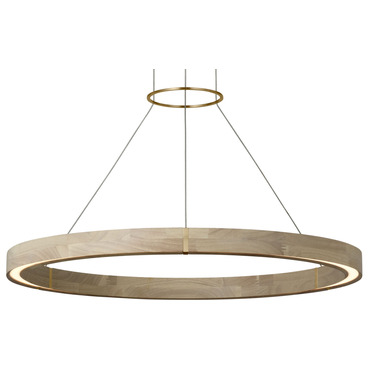
Contemporary chandeliers come in an exceptionally diverse range of forms. Linear chandeliers stretch horizontally across dining tables and kitchen islands, while globe chandeliers use single or clustered spheres to create balanced compositions. Sputnik-inspired chandeliers feature radiating arms for a dynamic midcentury modern look, and ring chandeliers use circular forms to create a streamlined architectural effect.
Sculptural chandeliers offer even greater freedom of expression. Branching structures, asymmetrical arrangements, cascading glass, abstract shapes, and modular compositions blur the line between lighting and art. These statement chandeliers can become defining elements within an interior, adding movement and visual interest even when the fixture is turned off.
Materials and Finishes for Contemporary Chandeliers
Material and finish can dramatically change the character of a modern chandelier. Glass chandeliers range from clear and opal compositions to colorful hand-blown forms, while crystal can be used in strea











 …








 (312) 944-1000
 215 W. Chicago Avenue, Chicago, IL 60654